Not Dealing with Dementia


June and Ward Cleaver (Barbara Billingsley and...

June and Ward Cleaver (Barbara Billingsley and Hugh Beaumont). (Photo credit: Wikipedia)

Television moms and dads are kind, generous, clean, independent, and a source of wisdom. Real life moms and dads can be mean, self-centered, critical, and looking for a handout.  Such is the cards some children are dealt.


Dementia

Dementia (Photo credit: Fulla T)

These abusive moms and dads don’t miraculously turn into saints as they age, either. Most of the time the dysfunctional behavior they’ve exhibited worsens, rather than improves, as they age. If they’ve abused drugs, alcohol, or neglected their health, they may get much worse.


What to do when bad mom or bad dad (or both) are no longer functioning well at home alone? I don’t mean the not able to shovel out their driveway or lift the air conditioner out of the window type problems. I mean when they think strangers are coming in through the drainpipes and they think one of the intruders stole their gun. That scary not functioning well may be dementia.


Dementia is a broad term used to describe difficulties in the areas of language, judgment, behavior, thinking, and memory. Some causes of dementia, such as metabolic disorders and tumors, can be reversed. Other causes of dementia, such as Alzheimer’s disease, can only be slowed down, not cured. Repeat, not cured.  Pay careful attention to the part of the happy pharmaceutical commercials that caution,  “All patients will get worse over time, even if they take wondrous dementia drug.”


If you’ve had a great relationship with your parents, filled with mutual respect and assistance, it’s easy to say you’ll do whatever it takes to keep mom and dad safe. Even if it means moving them out of the home they’ve lived in for the last thirty years. Even if it means hiring someone to stay with them so they don’t burn the house down. Even if it means hiding the car or car keys to prevent them from driving to their favorite store that went out of business twenty years ago. Even if it means taking time off from work to accompany them to doctor’s appointments or leaving work early to rush home to deal with emergencies.


But if you haven’t had a great relationship with your parent, maybe haven’t even talked to them in five, ten, fifteen, or twenty plus years, what’s your responsibility when the neighbors start calling with their concerns? Do you forget the past and hope they’ll become nice? Put on your martyr uniform and hope for the best? Make an anonymous call to Elder Services and wash your hands of it?


There is no easy answer to these questions. Letting your conscience be your guide doesn’t mitigate the guilt that comes with the decision to keep your distance from a demented parent. If you decide to re-engage with the parent, there will still be the resentment that comes with putting your own life on hold to care for a parent who never cared for you. It’s an intensely personal decision that each adult child must wrestle with and decide based on all of the myriad considerations and individual details of their life. If you do decide to ride to the rescue, don’t expect the parent to be grateful for your efforts. Age doesn’t make people any less dick-ish, nor does dementia.


As someone who has wrestled with this issue, rest assured I don’t take my abandonment of my parent lightly. There’s a better than average chance that I am the best suited of my siblings for understanding and navigating the complexities of having someone declared incapable of making decisions to pave the way for admission to a nursing home. Not just because I’m a nurse, but also because I’m the oldest. Unfortunately I can’t forget or forgive the toxic parent-child relationship that ultimately ended with my decision to stop speaking to my parent over twenty years ago. I can’t let that go, even though part of me says it’s my duty and part of me feels incredibly guilty that I can’t caretake this person who can no longer caretake themselves.


I won’t deny that seeing my parent in their current state, even from a distance without saying a word or them being aware of my presence, breaks my heart. I wish I could find it within myself to soften, bend, and do what some would insist is the right thing. But I can’t.


And as much as I salute those who can, I acknowledge that there are those of us who can’t. Age and infirmity doesn’t turn a toxic parent into a saint, it only turns them into a old, sick toxic parent. Don’t judge me for turning my back.  It’s like they say when you fly, if the oxygen mask drops down, you have to put it on yourself before you can help someone else. Unfortunately my parent has demonstrated that they would suck up all the oxygen in my world if they could. As bad as I feel about their condition, I won’t let them.

Day 3: flight to Yazd - inflight safety card

Day 3: flight to Yazd – inflight safety card (Photo credit: birdfarm)


When Your Employer Won’t Take No For an Answer

English: This is CDC Clinic Chief Nurse Lee An...

English: This is CDC Clinic Chief Nurse Lee Ann Jean-Louis extracting Influenza Virus Vaccine, Fluzone® from a 5 ml. vial. (Photo credit: Wikipedia) You go, girl!

The recent firing of 8 healthcare workers who refused to get a flu vaccination at Goshen Hospital in Indiana is not surprising. As influenza season kicks into hyper-drive, hospitals unleash the latest public relations strategy in making patients believe they are safer – mandatory flu vaccination for healthcare workers. The reasoning is that hospital inpatients are already vulnerable to infection and preventing healthcare workers from infecting them, because the healthcare worker has immunity due to the flu vaccine,  will save lives.  This mindset has a few flaws.

First, the flu vaccine is not 100% effective. That’s not to say I don’t get one myself, but, as the Centers for Disease Control (CDC) website points out:

“The effectiveness of influenza vaccines varies from season to season, and depends upon a number of factors. One factor is how well the vaccine strains match the viruses that actually circulate during the season. In addition, vaccine effectiveness is affected by the recipient’s age, immunocompetence, and previous exposure to influenza viruses.”

No 100% guarantee there.  In fact the CDC notes,  “Recent RCTs (Randomized Control Trials) of inactivated influenza vaccine among adults under 65 years of age have estimated 50-70% efficacy during seasons in which the vaccines’ influenza A strains were well-matched to circulating influenza A viruses,” “a study of Dutch community dwelling people aged 60 years of age and older reported a vaccine efficacy of 58%” and “study among 92 healthy adults aged 18–41 years, the efficacy of inactivated and live attenuated influenza vaccines in preventing laboratory-confirmed influenza was 71% and 85%, respectively.”

With the average age of registered nurses at 46 and doctors at 51, I’d guess the vaccination effectiveness is in the 50-70% range. Oh, and did I mention if you’re going to get immunity,  it can take up to 2 weeks after the shot to get immunity?

Even if it did confer immunity to 100% of the healthcare workers who received it, they are not the only carriers of influenza. Since the infected are able to infect others one day BEFORE getting symptoms and up to seven days AFTER getting sick, think of all of the other traffic in a hospital including visitors, admitted patients, and vendors. Are they all vaccinated against flu? Who knows. Can hospitals require them to receive vaccination? I’m guessing the answer is no. This means in a perfect world, with every healthcare worker not only immunized but also immune, there would still be potential flu carriers wandering the halls every single day. Since the flu can be spread to others up to six feet away, a vendor or visitor at the nurses station can infect a patient who is walking nearby for physical therapy. Unless hospitals go into lock-down at the start of flu season, a strategy of mandatory vaccination leaves plenty of room for infection.

Forcing people to get immunized for flu or lose their job is easy. In my book, proving that it is the best and most effective option to save patient lives is a little bit harder. Having worked in a number of healthcare institutions, I know most healthcare workers work sick for a number of reasons including managers who penalize them and co-workers who resent working short-handed. I also know that hand hygiene, considered the baseline measure to prevent the spread of disease, is nowhere near 100% in organizations. Instead of picking the low hanging fruit of vaccination, organizations should look toward preventing all healthcare acquired infections. I’d love to see someone fired for not washing their hands.

Instead, Goshen Hospital fires 8 out of 1300 people who refuse vaccination. It makes me wonder about the 1292 workers who didn’t get the vaccination, but were allowed to keep their job. Maybe the excuse was they don’t provide direct patient care. Maybe the hospital couldn’t take the financial hit of losing certain positions, such as doctors, surgeons, and top administrators.  Firing front line staff, such as nurses, therapists, housekeepers and food service workers,  has always been easier than the politics of firing the rainmakers of healthcare.

Perhaps this is just the first salvo organizations will fire in the crusade to show their commitment to patient safety. Imagine a hospital website proclaiming, “100% flu vaccination rate” instead of “71% rate of compliance with washing hands between patients.”  The illusion of safety provided by mandatory immunization shouldn’t be confused with the reality of 1.7 million hospital-acquired infections and 99,000 associated deaths each year.

For now, firing a few employees for show will have to do. I know I feel safer.

Fired red stamp

Fired red stamp (Photo credit: Wikipedia)

Plumbing the Depths of Grief

american somme cemetary Bony

american somme cemetary Bony (Photo credit: Wikipedia)

The death of a loved one is an impossibly agonizing, soul-crushing experience that never completely heals and only lessened by time. When my brother died in a car accident at the age of 25, I thought my tears would never stop.  From the moment I first heard the news, until the moment we lowered his body into the ground, I cried with a ferocity and singleness of purpose I didn’t know I possessed.  All the awful details of death, going to the hospital to get his personal possessions, cleaning out his apartment, picking out a coffin and the clothes he was to be buried in, were done with eyes blurred by tears and a voice hoarse from crying.  The procession of people bearing food and flowers seemed never ending, but I only hungered for alcohol and cigarettes.

After he was buried, the dreams started. Dreams of the two of us on a subterranean train system, the only illumination strobes of light that made him and the other passengers appear and disappear to the background sound of a speeding train racing over wooden tracks.  I was the only one who spoke in the dreams. He sat quietly, attentively, listening. I started out by speaking slowly, normally, and as the train raced along my words hastened to match its speed. I’d talk faster and faster, cognizant in my dream that the time to talk was soon coming to an end, and then he’d disappear.

I’d wake up crying, thinking I would pay any price for him to still be alive. Eventually my grief ebbed to where I could say his name without crying, and then to where I could look at his picture without my eyes growing teary, and now I survive without him. Still, 28 years later, I mist up whenever I hear the lines from “White Christmas” that promise “I’ll be home for Christmas, if only in my dreams”  because my dreams are the only place I can hope to see him.

Was I depressed during the grieving period? Yes. Did my doctor put me on antidepressants to numb the pain of my loss? No, and I’m glad he didn’t. My brother’s death was something I had to work through and plumbing the depths of my grief informed how I have dealt with the deaths of all of the loved ones that have followed him.

The American Psychiatric Manual has traditionally warned against diagnosing depression during bereavement, but now psychiatrists with ties to drug companies have helped to remove that warning and the makers of antidepressants stand to benefit from the change. If grief equals depression, grief is a treatable condition. A treatable condition is billable and amenable to interventions, in this case, prescription medications. Instead of providing a shoulder to cry on, doctors will provide a prescription pad to write on. And where does that leave the patient? Once again a normal part of life is medicalized, this time because drug companies want to take advantage of a market that increases every day, with every death.

Recently I heard the story of a mother who stood up at her son’s funeral and apologized because she had nothing to say to eulogize her son. She stood dry-eyed, unable to cry, and said she was on too many medications to feel anything but numb.  I wonder about her now, many  months after her son’s death, and whether she’s allowed herself to experience the pain of grief in all of its snot-drenching messiness. I hope so. I can’t imagine any crueler prison than not being able to let go of that pain.

In mourning death, we open our heart and let it bleed. Even though a scab may form, for a long time every memory rips it open and starts the bleeding again. It’s an unpleasant, unpredictable process, but as Henry Rollins says, “Scar tissue is stronger than regular tissue. Realize the strength; move on.”

The grieving process helps us to do that far more than any chemical ever will.

A Magic Pill

Pills

Pills (Photo credit: madcowIV)


Pills (white rabbit)

Pills (white rabbit) (Photo credit: erix!)


At least twice a week someone tells me about a magic pill. They discovered it on Dr. Phil or Dr. Oz, an infomercial or a magazine, from the recommendation of a friend or with the help of an alternative healer. No matter what the magic pill cures/heals/improves, it never requires the taker to do anything except remember to take the pill.


I’m always a little skeptical. Most things in life, to me at least, require some effort.


And it’s not like the people who believe in a magic pill are dumb. Incredibly intelligent people look me straight in the eye and tell me about the latest one. On some level, we all desperately want to believe there’s a shortcut to our dreams or a work around to our pain. But that’s not the case.


Life isn’t easy, it isn’t fair, it’s full of pain. If a magic pill could cure that, wouldn’t we all take one?


Except there’s something to be said for fighting the good fight and emerging successful. Whether it’s losing fifty pounds, marrying the man of your dreams, or conquering an addiction, the journey is the part that helps us to grow. The magic pill takes that away from us. It makes us believe in trickery.


It’s time we value the work of improving ourselves and our lives more than we value the magic pill. Yes, working through our problems is hard, but it is only when we fully accept and embrace the tough times and the difficult choices that we move forward.


Dealers Gotta Protect Their Turf

English: Vicodin tablets Italiano: Pillole di ...

English: Vicodin tablets Italiano: Pillole di Vicodin. (Photo credit: Wikipedia)

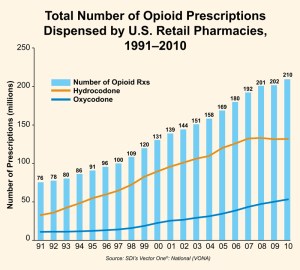
In New Hampshire, more people die of prescription drug overdoses than car accidents. CDC statistics report that prescription drugs are involved in 75% of all drug-related deaths in the United States. In 2011, the Centers for Disease Control estimated 14,800 deaths related to opioids (opioids or opiates defined as morphine, heroin, oxycodone, codeine, methadone, hydrocodone and hydromorphone.)  Note that with the exception of heroin, all drugs of abuse are available from your friendly healthcare provider.

Whether drug sales are illegal enterprises selling vials on the corner or a transaction that takes place in an exam room, it’s all about numbers and turf. Getting people hooked and keeping them coming back are the keys to a thriving business. For people with insurance, getting narcotics (opiates) from their local doctor or Emergency Room is easier and less expensive than going to the corner drug dealer, particularly since drug dealers don’t settle for a co-pay. Just as dealers rename their products to generate interest,  Big Pharma continues to feed the appetite of addicts with new medications and new formulations of old medications.

Narcotic painkillers have been combined with over the counter meds because of  the belief that the two medications together provide better pain relief than either of the medications taken alone. Unfortunately when people take two Vicodin (hydrocodone and acetaminophen) every 4 hours for pain round the clock (12 pills daily), they run the risk of liver damage because of the amount of acetaminophen bundled in the pill.  The makers of Tylenol (brand name acetaminophen) are so concerned about acetaminophen overdoses that they have decreased the recommended maximum daily dose from 8 pills daily (4000 mg)  to 6 pills daily (3000 mg). This change forces the makers of Vicodin to lower their recommended maximum dose to stay within the new guidelines and will result in Vicodin users having their daily dose decreased.  Sad that in the face of increasing numbers of overdose deaths due to prescription narcotics and the increasing number of prescription drug addicts,  the push to change labeling is due to the potential for a Tylenol overdose resulting in liver damage, rather than concern about overdose or addiction.

Of course the makers of Vicodin don’t want to see their business cut in half. They want to keep on selling the same number or more pills every year. Faced with the very real possibility that providers will decide to switch patients on Vicodin to a drug without any pesky daily maximums, the makers attempted the business affirming move of  trying to get approval for a pure hydrocodone pill. Luckily the FDA panel on pain relief voted against it.

The panelists agreed the higher dose of hydrocodone would be an effective pain reliever, but they felt uneasy providing another formulation of a drug in a class that is already widely abused. According to the Drug Enforcement Agency (DEA), hydrocodone is on the top of the list of most abused drugs in the United States. Sounds like a no-brainer.

Hopefully the FDA will agree with the panel and prevent a new dangerous drug from flooding America’s streets, school yards, and homes. In the war on drugs, our government has gone after the dealers of meth, pot, heroin, and crack. Somehow the legal dealers, Big Pharma, are allowed to thrive while they destroy lives.

opioid prescriptionsDo some people need narcotic painkillers to control their pain? Of course.  In the face of increasing narcotic use, do we need to add more potential drugs of abuse to the marketplace? I think not.  Big Pharma seems to be doing pretty well with what they have.

chart courtesy of the National Institute on Drug Abuse.

Barstool Thoughts

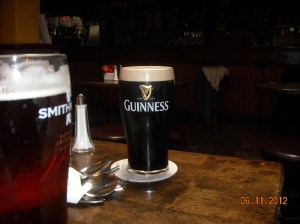
A perfect pour

A perfect pour

Sometimes you read a line in a book or hear a piece of dialogue in a movie or play that speaks to you. It hits your brain and then rattles around like a bullet, careening off memories, bouncing off preconceived notions, and generally making a mess of your thoughts. For me, the sources of these are varied. I’ve spent months, years even, pondering the magic behind words from movies that went straight to DVD and books that no one has ever heard of. They don’t resonate in my brain because the words are elegantly strung together. They resonate because they hit me where I live, wherever that is at the moment I hear them.

Last summer I read Gillian Flynn‘s “Gone Girl.” Two lines have stuck with me and continue to plague me on a regular basis. Protagonist Nick Dunne, bar owner and adult child of an alcoholic father says “There’s no app for a bourbon buzz on a warm day in a cool, dark bar. The world will always want a drink.”

In some ways, I feel like I’m one of the last generations to enjoy alcohol before societal pressure and Mothers Against Drunk Driving made the idea of demon rum reality. Home movies of my mother during her pregnancies show her drinking cocktails.  When I was pregnant, it was suggested pregnant woman should minimize alcohol. Now a pregnant woman drinking alcohol faces public scorn and possible child abuse charges if the fetus-is-a-person-with-rights movement gets its way.

Driving drunk used to be against the law, but in small towns the cops would have you park your car and then drive you home rather than take you to jail and book you.  Groups didn’t apear at bars with a designated or sober driver. Whoever was the least drunk at the end of the night took the keys.

Bars used to be serve people until they fell off their bar stools or passed out. Now they cut you off if you slur a word or stumble over someone’s foot. When’s the last time a bar had 2 for 1 specials? I remember bars where beers were 4 for a 1 and they’d put a case on ice on the table to keep the drinks flowing.

Giving babies brandy, wine, even whiskey for teething used to be an acceptable parental decision.  As children aged, parent sponsored alcohol use  included purchasing kegs for  end of season football parties or graduation. The host parents made sure everyone hung around and slept it off.  Now any drinking at a house party, whether the parent provides it knowingly or not, results in criminal charges against the parents.

And don’t get me wrong. I don’t bring up the past to make excuses for what used to be acceptable behavior.  It’s just that was the way it was and it will never be that way again.

Are we better off now than we were then? Statistics and government agencies say we are. But if you’ve never spent a quiet afternoon in a dim bar where the television volume is low and the bartender asks if you want another drink with gestures rather than words, I think you’re missing something.