What We Shouldn’t Do For Love

A heart being used as a symbol of love. Photo ...

A heart being used as a symbol of love. Photo modified by author using Photoshop. (Photo credit: Wikipedia)

Urban legends and medical lore are full of the things people do for love. The 22-year-old girl who lifts the car crushing her father. The mother who rushes into a burning building to rescue her children. The father who doesn’t know how to swim, but jumps into the water to save his drowning son.

There are some things, however, that push us to the edge of what we will do for love. Loving an addict is one of those things. It’s tough wondering when the phone call asking for bail money will turn into the one asking you to identify a body. No one’s morning should start in a bedroom doorway worrying if the person inside is passed out or dead.  Life is hard enough without a daily routine of second guessing whether to argue or remain silent. After a while, silence is easier.

Because, after a while you realize that no matter how much you love the addict, you can never make the right decision, say the right thing, or provide the missing ingredient to keep them clean and sober. No one is  capable of stopping the addiction except the addict. Until they admit their problem and get help, no amount of love will make them whole.

It truly is not you, it’s them.

And when you make the decision to leave, the heartache doesn’t stop. Who will take care of them if you’re gone? Make excuses to the few friends that are left? Divert the phone calls from work? Pick up the slack when they spend days in bed recovering from binges?

The pull to go back is stronger than a riptide. It sucks you back and keeps you in place.  To apologize, to make excuses, to take the blame. It’s familiar, comfortable, and as reassuring and necessary as the booze or pills are to the addict.

Until one day you realize that in order to save anyone, you have to save yourself first. You can’t move the car off a loved one if you’re pinned beside them. You can’t save someone from a burning building dressed in gasoline-soaked clothes. You can’t rescue a drowning man when he’s pulling you down with him.

You can’t.

Read all the fairy tales, urban legends, and medical myths you want on the power of love, not all of love stories have happy endings. There are some things love can’t fix. Addiction is one of them.

All you can do is save yourself.

Want more information? Check out the links below:

Alcoholics Anonymous, Narcotics Anonymous, Al-Anon Family Groups, Nar-Anon Family Groups

Who Gets to Decide to Withhold CPR?

I’m not sure what I’d do if a patient collapsed in front of me and the administrator said, “No CPR. It’s our policy.” Since I’ve been a nurse, I’ve heard of slow codes, where the unspoken agreement is that if the person stops breathing the staff will purposely react as slowly as possible to give the person a chance to die, but I’ve never participated in one. The decision to either be resuscitated or be a DNR (do not resuscitate) is a personal one and the slow code takes that decision away from the individual. That goes against my philosophy of nursing.

English: CPR training

English: CPR training (Photo credit: Wikipedia)

Today’s news involves a nurse who did, in fact, stand by and refuse to do CPR when a patient went down. The facts seem simple. A woman collapsed in the dining room of an independent living facility. A nurse called 911 to report the incident. The 911 dispatcher asked the nurse to start CPR. The nurse refused, stating it was against company policy.

The 911 dispatcher didn’t give up. She asked the nurse to find someone who would start CPR, asking “Is there anybody that’s willing to help this lady and not let her die?” Again the nurse said no. The dispatcher continued to plead, as if the provision of CPR was the only surefire way to prevent this woman’s death.

Seven minutes 16 seconds later, emergency personnel arrived. The woman had no pulse and was not breathing. They started CPR.  The 87-year-old woman was declared dead at the hospital.

This has upset a lot of people. Upset some to the point that the police are trying to figure out if they can charge the nurse with a crime. The belief is that CPR would have saved this woman and the absence of CPR caused her death, and that’s not entirely correct.

According to Dr. Robert Shmerling in a post entitled, CPR: Less Effective Than You Might Think

“As opposed to many medical myths, researchers have reliable data concerning the success rates of CPR (without the use of automatic defibrillators) in a variety of settings:

  • 2% to 30% effectiveness when administered outside of the hospital
  • 6% to 15% for hospitalized patients
  • Less than 5% for elderly victims with multiple medical problems”

Another study that looked at out of hospital cardiac arrests found that successful resuscitation decreased with age. 40 and 50 year olds had a 10% chance of a successful resuscitation while patients over 80 only had a 3.3% survival rate.

No magic bullets here. There is no guarantee that CPR would have prevented this woman’s death. If she’d survived, there’s no guarantee of the quality of life she’d enjoy afterwards.

In this case, the independent living facility (not assisted living, not a nursing home, not a rehabilitation unit) maintains the residents are advised that in the event of a medical emergency staff members will call emergency services, but not provide CPR.  Employees are told the same thing.

The dead woman’s daughter said, “I don’t believe if CPR were done it would’ve helped or changed the result. This is not about my mother or me, this is about the policy of the facility, and we understood the policy, and I agree with what was done.”

Which brings me back to the original question. If the woman collapsed in front of me and, as a condition of living in the facility she’d agreed the staff wouldn’t perform CPR, would I have stood by and done nothing? With an underlying belief that the patient gets to make the decisions, I very well might have.

Patient’s Rights Shouldn’t Be at Nursing’s Expense

Group of nurses, Base Hospital #45

Group of nurses, Base Hospital #45 (Photo credit: The Library of Virginia)

Providing nursing care is an intimate business. Nurses are at the bedside for births, life-threatening injuries, chronic conditions, and death. They become familiar with both a patient and their family. Helping people navigate these life changes takes compassion and empathy. There are days it is damn hard to be a nurse.

Twenty-four hours a day, seven days a week, if you’re in the hospital there will always be a nurse on-site. Budget cuts, staffing issues, increasingly complex machinery and treatments all contribute to the stress that nurses must deal as well as twelve-hour shifts, mandatory overtime, and working holidays and weekends.  Nurses are expected to keep patients safe, use resources wisely, and provide culturally competent care. The nurse is required to respect each patient as a person.

That makes it even more distressing when a hospital disrespects a nurse and her rights as in a recent lawsuit against a Michigan hospital.

The lawsuit alleges that a nurse of 25 years standing in a Neonatal Intensive Care Unit was told by her supervisor she would no longer be assigned to care for an infant because the baby’s daddy didn’t want African-American nurses caring for his child. The man showed the supervisor a swastika-type tattoo in relating his request. According to the lawsuit, the baby’s chart was prominently marked to indicate no African-American nurses were to be involved in this infant’s care. This was honored for a month before the hospital attorney stepped in and had the notation removed.

English: The Neonatal Intensive Care Unit (NIC...

English: The Neonatal Intensive Care Unit (NICU) at Kapiolani Medical Center in Honolulu, Hawaii (Photo credit: Wikipedia)

I don’t know what the hospital was thinking, other than to make the customer happy, but they should have told the man that they weren’t going to allow his hateful beliefs to compromise the care of his child and demean their employees. They could have offered to transfer the child to an institution willing to make those choices, if they could find one. They could have had their Ethics Board review the case and come up with an appropriate plan of care that didn’t imply that African-American nurses were any less competent, worthwhile, or caring than their white, Hispanic, or Asian counterparts. They could have done something.

Woman at work--registered nurse

Woman at work–registered nurse (Photo credit: yooperann)

Instead they bowed down to the demands that were not only hateful, but illegal. If the allegations are true, for an entire month qualified, trained nurses were told they weren’t the right color to provide care and that’s just plain wrong.

Skip the Sex and Spinach

Every time I pick up a newspaper or check out the online news I’m amazed by the new studies that shed light on healthcare myths. At this point, you’d think researchers would be running out of things to challenge, but no, there’s still plenty of information, once thought of as gospel, that now turns out to be nothing but wishful thinking and fantasy.

News this week that made me think “duh”? Green leafy veggies are the most common cause of food poisoning.

Lettuce

Lettuce (Photo credit: photofarmer)

Common sense says why the hell wouldn’t they be? Leafy greens live down at ground level, get submerged in mud every time it rains, and they are hard to clean. Fields of green being planted or picked by migrant workers who probably don’t have ready access to porta-potties (though it makes sense not to set up porta-pottties near food) are the most likely culprits in providing a little e.coli to the mix.  That triple washed on the package may mean triple washed in sewage. Luckily, lettuce is easy to grow at home.

In news designed to infuriate drug makers, another study looked at male erectile dysfunction and heart disease. Forget those commercials with bathtubs and happy couples, the more severe a man’s ED, the greater his risk for heart disease and premature death.

cialis

Doctors are advised to screen and test men for heart disease instead of discreetly passing along a six pack of Viagra.

The New England Journal of Medicine stepped in this week to debunk some myths about weight loss. Turns out having sex does not burn 100-300 calories per participant.  It only burns a measly 50 calories,  equal to 10 minutes of vacuuming or 20 minutes of typing.

"Vacuuming" (93/365)

“Vacuuming” (93/365) (Photo credit: kalavinka)

So for weight loss, skip the sex and grab a vacuum. You might not work up the sweat associated with sex, but you’ll look better burning those 50 calories.

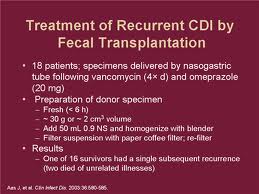
It turns out fecal transplants can be a real lifesaver. Hard to treat c. difficile infections respond better to a procedure involving donor feces infused into the patient’s small intestine than they do to antibiotics. I am not shitting you on this. Doctors who promote this treatment agree that the science bears them out, but the ick factor involved, both having the treatment and harvesting the feces for treatment, make it a tough sell.  fmt

The award for best research goes to the scientists who looked into the killing capability of cats. There is a reason that cats in movies and books are suspected of smothering babies in their sleep and nudging the elderly or infirm down stairs.

English: Young street cats, Portugal.

English: Young street cats, Portugal. (Photo credit: Wikipedia) Cats awaiting their next victims.

It’s well known that cats carry germs that cause depression and miscarriage.  Now it’s revealed that cats kill 1.4 to 3.7 billion birds and 6.9 to 20.7 billion mammals every year. Not only are they killers, they’re serial killers. Feral and outdoor cats contribute to the bulk of the killings, but people with indoor cats should be aware that, quite possibly, their fluffy little friend is plotting their demise.

Thanks, science!

Have any freaky health research studies? Let me know in the comments.

Screening Mammograms May Be Dangerous to Your Health

Breast cancer awareness

Breast cancer awareness (Photo credit: The Suss-Man (Mike))

Recently I had the  unsettling experience of being called back for additional views of my left breast after my screening mammogram.  I had questions for the radiologist prior to consenting to the additional views and he had one for me, where had I gotten last year’s mammogram?  I replied I hadn’t as I was following the U.S. Preventive Services Task Force (USPSTF) recommendation that average-risk women get mammograms every 2 years.  Many doctors, particularly radiologists, don’t buy into the recommendations and advocate for yearly mammograms. The radiologist implied if I’d had a mammogram last year, we’d know more about the suspicious finding on this year’s mammo. In other words, if something was wrong, it was my own damn fault. Call me cynical, but any group that makes a steady income on screening procedures isn’t likely to agree with a recommendation that will cost them business.

I choose to follow the guidelines because I’m a little suspicious of the entire screening mammography experience, particularly when the National Cancer Institute website points out “Potential harms of screening mammography include false-negative results, false-positive results, overdiagnosis, overtreatment, and radiation exposure.”

As medical science looks at cancer more closely, it turns out that some abnormalities labeled as cancer are not a threat to a women’s health and will not lead to death (A similar conclusion was reached after screening males for prostate cancer became widespread and led to overdiagnosis and overtreatment). The New England Journal of Medicine recently reported on breast cancer overdiagnosis, defined as cancer that doesn’t need treatment.  The study found that up to one third of breast cancer diagnoses, between 50,000 to 70,000 cases annually, don’t need treatment. Experts even debate whether one type of cancer, DCIS (ductal cancer in situ), should even be called cancer. In a 2006 study founded by the Susan G. Komen foundation, they estimated that 90,000 diagnoses of DCIS were actually misdiagnosed because of pathologist error, leading to incorrect treatment.  So medicine is really great at FINDING cancer, not so good at figuring out whether it needs to be treated.

Cancer treatment comes with it’s own set of risks. Errors involving chemotherapy and radiation treatment helped to define the patient safety movement. When 32 year old health columnist Betsy Lehman died after receiving a massive overdose of chemotherapy four days in a row in 1994 at Dana Farber, institutional policies changed to include double checking of medication calculations and closer supervision of physicians in fellowship training. Even so, a second patient subsequently suffered a chemotherapy overdose of the same medication. Radiation treatment holds the same risk of the cure being worse than the treatment. In 2007 a man with tongue cancer died of a radiation treatment overdose that left him deaf, partially blind, unable to swallow, and caused his teeth to fall out. Even after the cause of his radiation overdose was identified, other patients around the country suffered a similar fate.

When all was said and done, my repeat mammogram turned out to likely be a cyst and a six month view of the breast should bear that out.  If the diagnosis had been different, how would it have felt to challenge the doctors treating me? Asking for a second, independent pathology review, double checking all medication calculations, and, in the case of radiation, learning about the equipment and asking questions to ensure it was properly calibrated and set up all seems like a large burden for someone coping with cancer. Even more troubling is the thought that questioning the supposed experts could lead to an adversarial relationship with the medical team. It’s too easy in healthcare to label someone a bad patient or noncompliant when they question the doctor.

The problem is that many of the truths that medicine hold true aren’t true at all.  Receiving a cancer diagnosis must be hard enough. Having to question it’s validity and treatment is a burden no one should have to bear.

Should You Call In Sick Tomorrow?

My mother believes that being sick of work is a valid reason to take a sick day or, as she calls it, a mental health day. She also maintains that calling in sick at the beginning of your work day doesn’t mean you have to be sick all day. She had no problem using her sick days to go shopping, see movies, and visit friends. Out of town, of course.


A page of the manual showing a man unnecessari...

A page of the manual showing a man unnecessarily calling in sick to work, diminishing productivity, especially in the nationalized industries of a Communist country. (Photo credit: Wikipedia)


For me, calling in sick is a perilous decision, fraught with guilt and second guessing. I’m lucky in that I don’t hate calling in sick because of the financial hit, I get paid time off, I hate it because I work in healthcare. Healthcare, like many other professions, is stretched a little thin these days. If one person doesn’t show up for work, everyone else has to pick up the slack.  Forget about managers being pissed off at a sick call. Imagine the agonized groans of your co-workers when they hear the news.


Sick day

Sick day (Photo credit: emotionaltoothpaste)


So how to decide whether to go to work tomorrow or not? Here are the rules I live by:


1.) In case of vomiting, stay home. Your co-workers have no interest in cleaning up after you and the lingering smell may cause your less iron-stomached co-workers to join in the fun.


2.) In case of diarrhea, stay home. No one wants to catch a waft of your stomach-turning stomach upset when they walk past the bathroom or jump out of your way as you make a frantic dash to get to the bathroom in time.  Chances are you have a perfectly good, private bathroom at home, use it.


3.) In case of a fever of 100.5 or greater, as confirmed by an actual thermometer, take some Tylenol or Motrin and stay home.  Imagine your fever as a wildfire, eagerly waiting to take down everyone at your workplace. Be the fire line, not the pyromaniac.


4.) In case of hacking up a lung each time you cough, stay home. No one at work wants to see your phlegm or discuss the color, consistency and amount with you. Practice until you can manage a discreet, civilized cough. It can be done.


Moulin Rouge

Moulin Rouge (Photo credit: Pep_Parés) in Moulin Rouge Nicole Kidman showed you can have a classy cough, even if it’s killing you


5.) Most importantly, in the case of any infliction, emotional or physical, that makes it impossible for you to properly perform your job duties, stay home.  No one wants to watch a co-worker crying in pain or emotional distress for eight hours. It slows down production.

Staying home sick should be a rational, easy decision if you use your common sense. And, unless you’re headlining a stadium tour, your absence from the workplace for a day or two won’t bankrupt the business or break the heart of thousands of fans and vendors.

Remember, sometimes not going to work is the best gift you can give to your co-workers. Use it wisely.